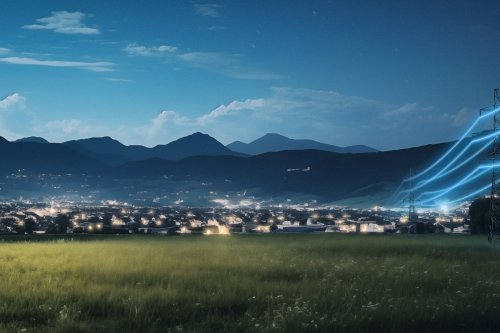
We are in the midst of a structural change and stand at a historic turning point that will shape Switzerland’s energy future. The interplay of modern technologies, progressive legislation such as the Federal Act on Renewable Energy, and market opening is accelerating the transition toward a greener, more digital, and customer-centric energy system.
For energy providers, this development offers exceptional opportunities but also poses existential challenges. Companies that drive innovation will shape the industry of the future — while those that hesitate risk losing relevance in a market increasingly defined by agility, customer focus, and technological excellence.
The Perfect Storm: Catalysts of Change
Switzerland’s energy transition is being driven by several forces at once. The 2022 energy crisis exposed the vulnerability of import-dependent systems and underscored the need for greater energy security. Since then, strategic hydropower reserves, additional capacity, and reduced dependence on neighboring countries have moved into sharper focus.
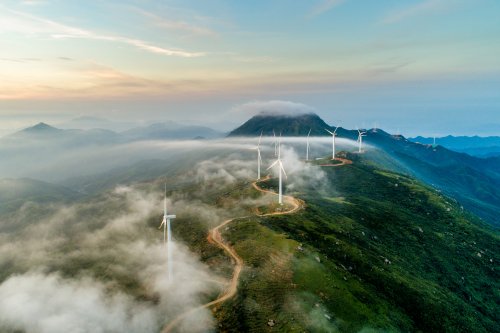
Climate targets are also setting clear priorities. Achieving climate neutrality by 2050 requires a massive expansion of renewable energies — above all, solar power. With the nuclear phase-out, seasonal limitations of hydropower, growing electrification of society, and rising energy demand, the urgency of fundamental reform has become undeniable.
At the same time, technological progress is enabling economically attractive modernization. Artificial intelligence (AI), smart meters, and modern analytics systems are unlocking new opportunities in energy management that would have seemed almost unimaginable just a few years ago.

Technology as the Foundation: Smart Infrastructure as the Key
The legally mandated rollout of smart meters by 2027/28 is creating the data backbone for a new kind of energy system. Even today, the picture across cantons is diverse — with coverage rates ranging from 20 percent to near-complete implementation in leading regions.
Once nationwide deployment and unified communication standards are in place, Switzerland will, for the first time, have a consolidated infrastructure on a national level. The true potential emerges when energy management systems are connected with AI solutions that process detailed consumption data in real time.
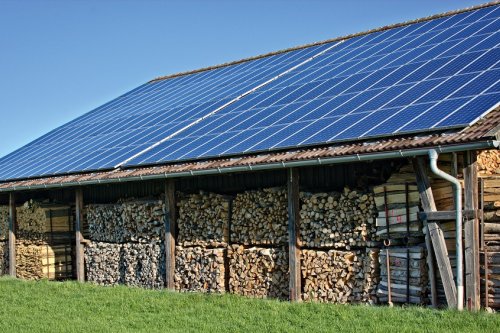
The impacts are far-reaching: Excess solar energy during midday hours can be efficiently utilized through AI-driven price adjustments — for example, to charge electric vehicles, control household appliances, or store energy in battery systems. Such intelligent control will become indispensable as Switzerland’s installed solar capacity is expected to exceed 8 gigawatts by 2025, fueled by continuous investment, new legislation, and ambitious political goals.
Through our work, we have observed how integrating AI enables highly advanced forecasting — taking into account weather data, historical consumption patterns, and real-time grid conditions. This allows for precise predictions of energy availability — a crucial factor for energy security, particularly during winter months when hydropower reserves are lower.

Regulatory Revolution: New Laws Create Competition and Energy Communities
Switzerland’s regulatory landscape is evolving at a remarkable pace. With the Federal Act on Renewable Energy — approved by 68.7% of voters in June 2024 — the legal foundation for Local Energy Communities (LEGs) will come into force in 2026.
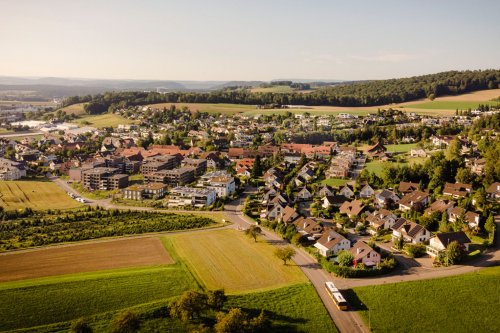
This law fundamentally reshapes the framework by allowing companies, municipalities, and households to jointly produce and consume electricity within shared distribution networks. It enables several models of energy communities: classic collective self-consumption within a building, virtual models spanning multiple buildings, and innovative LEG models that can extend across entire municipalities. Financial incentives include a reduction in grid usage fees of 20–40%.
The announced full market liberalization will also end the existing system in which 99% of consumers cannot freely choose their provider. Experience from neighboring countries shows that liberalization gives customers new choices — based on price, service quality, or the source of electricity, including 100% renewable options. It also strengthens integration into the European energy market and optimizes the use of Switzerland’s 41 cross-border connections.
With market liberalization, dynamic tariffs will become the new standard. Prices will respond to supply and demand in real time, laying the foundation for renewable energy systems with intelligent grid control — while allowing consumers to optimize their costs.
Innovation Pressure: Customer Needs Drive Digital Transformation
Consumer expectations are rapidly adapting to these new conditions, creating strong innovation pressure on utilities. In the past, customers typically reviewed their electricity costs only once a year — when they received their bill. Today, they expect far more: transparency about energy sources, access to real-time consumption data, and proactive insights about their usage. Many have become “prosumers” or “flexumers” — generating, storing, and managing their own electricity through solar panels, batteries, or EVs. For utilities with little prior experience in user experience design, this shift poses a major challenge.
Meeting these expectations requires advanced data analytics, intuitive user interfaces, and seamless integration between energy management and customer systems. The technical complexity is high — but in a liberalized market, it becomes a decisive competitive factor.
As new market players and service offerings emerge, differentiation increasingly depends on digital capabilities and customer experience quality. Utilities must evolve from pure energy suppliers into holistic service partners — offering solutions for consumption optimization, smart home integration, and community management. Providers that offer “one-stop-shop” experiences will dominate the market in the long run.
Regulatory developments reinforce this shift: LEG compliance, smart meter integration, and dynamic tariffs all demand technological maturity — something many legacy systems cannot currently deliver.

The Critical Bottleneck: Legacy Systems Reach Their Limits
Despite the obvious need for innovation, many Swiss utilities face a fundamental problem — outdated billing and customer infrastructures.
These systems were built for an era defined by annual meter readings, manual processes, and fixed tariffs. They are overwhelmed by the requirements of smart meter data, dynamic pricing, energy communities, and real-time interaction. The challenge goes beyond technology — it demands a complete redesign of business processes.
Traditional billing models rely on clear meter readings and standard tariffs, using manual workflows: manual data entry, paper billing, and siloed systems. Such inefficiencies cause errors, delay responses, and prevent the real-time communication that modern energy management requires.
Modern services, by contrast, depend on continuous data processing, advanced algorithms for consumption allocation, and complex tariff structures that distinguish between community-generated and grid-supplied energy — while integrating market prices transparently for customers.
The consequences of delayed or insufficient modernization are severe — and dangerous in a competitive market. Consumers now expect mobile apps with real-time data, web portals for active energy management, and transparent billing for complex tariffs. Providers with fragmented IT infrastructure simply cannot meet these demands and risk falling behind.
The Path to Modernization: Strategic Solutions
Our work with utilities in Switzerland, Austria, Germany, and other European countries shows what drives successful modernization — both for short-term compliance and long-term competitiveness.
At the core is an integrated platform architecture: end-to-end systems that unify metering, pricing, billing, and customer interaction through standardized interfaces, while integrating with ERP systems. This minimizes disruption and enables scalable capability growth.
Equally essential are dynamic pricing engines that allocate consumption within communities, respond to market fluctuations in real time, and maintain transparency and regulatory compliance.
Customer experience must not be treated as an add-on — it is a core part of the offering. User-friendly portals and mobile applications must provide full transparency on consumption, LEC participation, and self-service functions — matching the best digital experiences available.
Scalable implementation ensures that modernization can happen step by step, without interrupting operations. This allows utilities to meet regulatory requirements while developing value-added services that drive revenue and secure market share.
A Call to Action: Shaping Switzerland’s Energy Future
At this historic turning point, success will belong to those who modernize their billing systems, customer interactions, and operational capabilities to align with the new energy landscape.
The transformation is already underway. Market leaders are investing in cutting-edge technology, creating new customer experiences, and laying the groundwork for the competitive environment of tomorrow. The question is not whether the change is coming — but whether your organization will shape it or react to it.
Switzerland now has the opportunity to leap efficiently into a modern energy era. With a clear strategy, strong technology partnerships, and a commitment to innovation, the sector can deliver the sustainability, resilience, and customer experience the market will demand.
The energy transition is already reality — and market leadership will go to those who seize this moment with vision, determination, and decisive execution.
The future of Swiss energy will be written by those ready to shape it today.