
Security of supply begins with digital resilience

17.11.2026
Marco Müller
Marco Müller
VP Global Marketing & Communication, Dätwyler IT Infra AG
Markus Müller
Markus Müller
Sales Manager ICT, Dätwyler IT Infra AG
Without resilient ICT, there can be no secure electricity supply: data centres, fibre-optic networks and digital systems are just as critical to operations today as transformers and switchgear. Energy suppliers must therefore consistently consider cybersecurity, physical security and infrastructure as an integrated whole. Digital resilience has become a core task for the sector.
Disclaimer
PerspectivE is a platform within the VSE website and offers the association industry, science, politics and the economy the possibility to publish industry-relevant specialist articles and analyses free of charge. External authors express their personal opinions in these articles. This does not necessarily reflect the views and positions of the VSE.

The quiet transformation of the energy supply

Winter electricity, power plant capacity and the expansion of renewable energy are the subject of intense public debate. Far less attention is paid to a success factor without which none of these developments can work: information and communications technology (ICT).

Decentralised generation, smart grids, smart metering, electric mobility and digitalised operating processes are fundamentally changing the requirements placed on energy utilities. Grid control centres, SCADA systems, remote-control technology, IoT sensors, intelligent transformer stations and, in some cases, cloud-based management systems now form the nervous system of the energy supply. They enable generation, transmission, distribution and consumption to be monitored, analysed and controlled in real time.

The consequence is clear: the more digitalised the energy supply becomes, the more directly its availability depends on that of ICT. Today, security of supply is no longer based solely on power lines, transformers and switchgear, but equally on data centres, communications networks, data security and digital operating processes.

Security of supply has acquired a digital dimension

The mandate itself has not changed: a regional energy utility must supply the people and businesses in its region with energy reliably, safely and economically always. What has changed is how this is achieved. If a data centre fails, communication between the control centre and substations is interrupted, or a grid control system is affected by a cyber incident, the impact on grid operations is immediate. This brings an issue that was long discussed mainly within the IT department to the forefront: digital resilience.

Resilience means more than protection

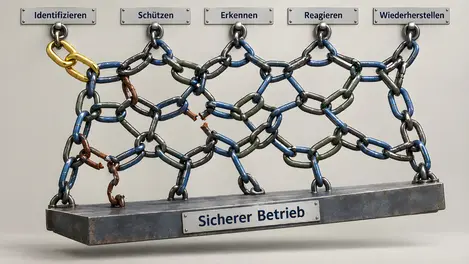
What distinguishes a secure company from a resilient one? The terms are often treated as synonymous, although they address different aspects. Security aims to prevent disruptions. Resilience describes the ability to remain operational even under exceptional conditions. A resilient company can:

  • prevent disruptions
  • detect incidents at an early stage
  • limit their impact
  • maintain critical processes
  • restore normal operations quickly

For energy utilities, this means that not every disruption can be prevented. What matters is that a single incident does not become a large-scale operational problem. The question is therefore not whether an event will occur, but how well the organisation, its processes and its infrastructure are prepared for it.
Resilience is not a state but a capability, and capabilities must be practised. Organisations that do not regularly test their emergency and restart plans under realistic conditions will only discover in a real emergency whether those plans work.

The data centre is becoming the heart of grid operations

In the past, the data centre mainly housed conventional business applications. Today, it is the central platform for grid control centres, a wide range of control systems, smart metering, geographic information systems, asset management, operational data capture and, increasingly, data analytics, automation and artificial intelligence. It has therefore become a critical operational asset in its own right: its availability directly determines whether an energy utility can operate its grid safely and reliably.

At the same time, a significant share of the existing infrastructure is reaching the end of its life cycle. Numerous systems were installed ten to twenty years ago and have been continually expanded. What began as a standalone server solution or local grid control system has grown into a complex landscape of IT and OT systems. Modern cloud and virtualisation platforms meet older control and remote-control systems. Business-critical applications frequently run on hardware that is no longer supported by the manufacturer and for which spare parts are scarcely available. Security updates, upgrades or certifications may no longer be possible or economically viable.

Modernisation thus becomes a balancing act between stability and renewal. Proven systems cannot be replaced overnight, yet every additional year of operating outdated platforms increases the risk. What is needed are migration strategies that allow legacy and new systems to operate in parallel.

Experience from implementing numerous infrastructure and modernisation projects for critical infrastructure operators shows that individual technical measures alone are rarely enough. Successful transformations occur where the data centre, network infrastructure, security architecture and operating processes are viewed as an integrated system from the outset. Especially where established OT environments meet modern IT platforms, a holistic planning and migration strategy pays off by improving availability, security and future-readiness at the same time.

Modular data centre concepts provide compelling approaches: new infrastructure is built step by step and applications are migrated gradually, while critical operating processes remain available. Virtualisation, edge computing, hybrid operating models and the consistent separation of IT and OT environments play an important role in this.

Key requirements include:

  • redundant power supply with A and B feeds
  • UPS and emergency power concepts
  • redundant cooling
  • early fire detection and extinguishing systems
  • geographically redundant backup sites
  • high-availability network architectures
  • defined recovery objectives (RTO and RPO)
  • physical and digital security concepts
  • scalability for future performance requirements
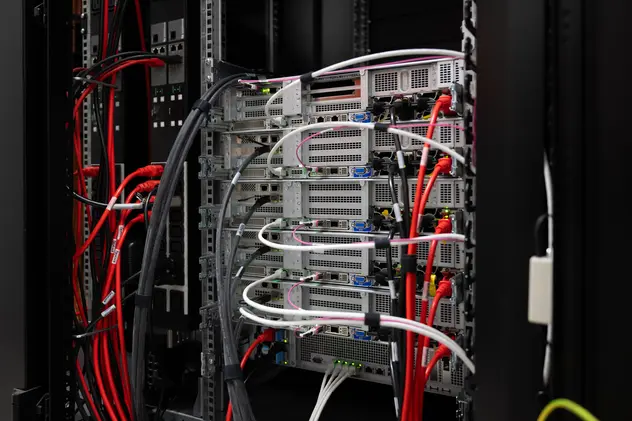
Redundante Energie- und Datenverkabelung
Figure 1: Redundant power and data cabling
Branderkennung und Löschsysteme
Figure 2: Fire detection and extinguishing systems
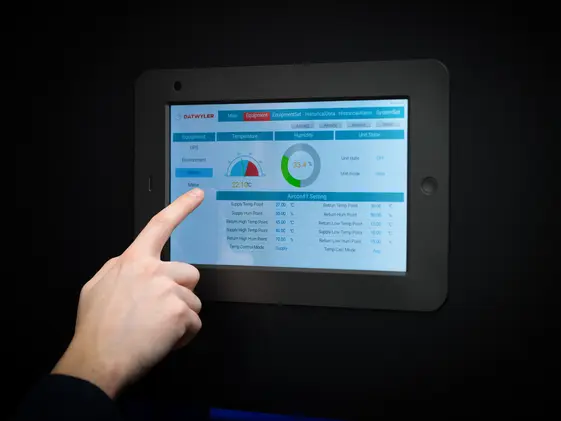
Monitoring- und Fernwartungssysteme
Figure 3: Monitoring and remote maintenance systems

Data centre projects have therefore long since ceased to be purely technical undertakings. They are transformation projects that affect infrastructure, processes, organisation and risk management in equal measure. Organisations that postpone renewal for too long risk rising operational exposure, declining security standards and growing dependence on systems that are no longer supported.

Every year that a system continues to operate without manufacturer support is a risk decision. It should be taken consciously, documented and endorsed by executive management rather than arising by default through repeated postponement.

The underestimated importance of physical network infrastructure

Every digital communication begins with a physical connection. Nevertheless, cabling is rarely the focus when critical infrastructure is secured; attention is usually directed towards cybersecurity, redundancy concepts and software. Yet outdated, insufficiently documented or non-redundant cabling systems can become a single point of failure.

Structured cabling forms the foundation of the entire digital infrastructure:

  • in the data centre
  • in grid control centres
  • in transformer stations
  • in operating facilities
  • at edge locations

Fibre-optic networks in particular play a strategic role. Alongside conventional corporate data, they increasingly carry operational, video and sensor data as well as information from OT systems. Requirements for bandwidth, latency, reliability and scalability are rising accordingly. High-quality cabling is a prerequisite for the deployment of future technologies.

«In practice, we repeatedly see that physical network infrastructure plays a far more strategic role than is often recognised. In numerous projects, we have ultimately traced performance bottlenecks, security risks or restrictions on digitalisation back to cabling structures that were not sufficiently scalable or had evolved over time. A future-ready infrastructure must therefore be planned end to end, from structured cabling and fibre-optic backbones to the connections for data centres, control centres and edge locations.»

Lukas Kurmann, Head of Services and Solutions at Dätwyler IT Infra

Anyone seeking to increase the resilience of their ICT must therefore look beyond applications and systems and consider the infrastructure as a whole. A structured, well-documented network infrastructure creates transparency, simplifies operations and improves reliability. Its quality is a decisive factor in how resiliently an energy utility can respond to disruptions, peak loads and new requirements.

Cybersecurity is becoming a management responsibility

With every additional interface, connected system and new application, the attack surface for cybercriminals and other threat actors grows. A successful attack can cause data loss and operational interruptions; in the worst case, it can also impair the stability of critical supply processes. What is at stake is therefore not merely the availability of individual IT systems, but potentially the security of supply for entire regions.

Cybersecurity is therefore no longer solely the responsibility of the IT department; it is part of corporate governance and operational risk management. The regulatory framework is also becoming more stringent: since April 2025, cyberattacks on critical infrastructure in Switzerland must be reported to the Federal Office for Cybersecurity (BACS). The Electricity Supply Ordinance sets minimum requirements for information security, while the VSE baseline protection for Operational Technology provides a sector-specific reference framework. International standards such as ISO/IEC 27001 and IEC 62443 supplement these requirements.

For energy utilities, this includes:

  • network segmentation
  • consistent separation of IT and OT
  • multi-factor authentication
  • continuous monitoring
  • Security Operations Centre (SOC)
  • regular penetration tests
  • defined incident response processes
  • employee training and awareness

Most energy utilities already have many of these building blocks in place. The decisive factor is that they do not exist side by side, but interact as an integrated system and are managed across functions.

Cybersecurity belongs on the agenda of executive management and the board of directors, not in an appendix to the annual IT report. Those responsible for security of supply are also responsible for its digital foundation.

Why physical security and cybersecurity are converging

An open door to a technical room, an unsecured server rack, an unescorted visitor: circumventing sophisticated security concepts often requires no elaborate hacking attack. Even state-of-the-art firewalls, encryption technologies and surveillance systems lose their effectiveness if attackers gain physical access to critical systems. Digital security does not end at the firewall.

The boundaries are blurring in both directions. Attacks increasingly target the infrastructure itself, for example by manipulating network components or damaging cable connections. Conversely, modern access-control, surveillance and building-management systems are themselves part of the connected IT and OT landscape and are therefore potential targets. Protecting data centres, network rooms, control centres, operating facilities and communications paths is thus just as much a part of security of supply as firewalls, segmentation or security monitoring.

The most important physical measures include:

  • intelligent access controls
  • visitor management
  • security zones
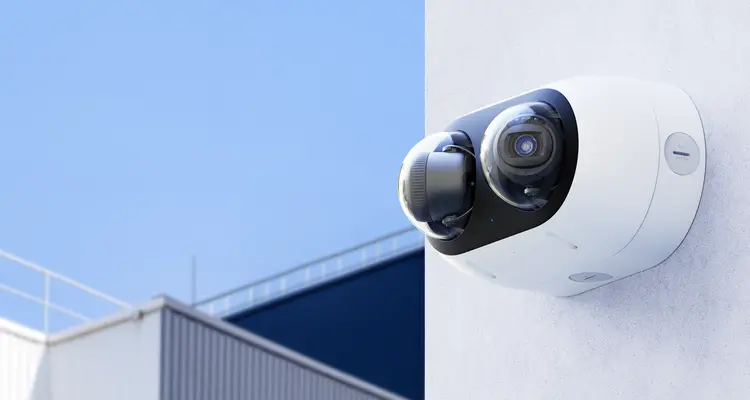
  • video surveillance and intrusion detection systems
  • rack access management
  • environmental sensors
  • event documentation and audit trails

This makes it possible to document not only access to buildings and rooms, but even access to individual racks, network distributors or infrastructure components without gaps. Security events are detected more quickly, responsibilities can be assigned more clearly and compliance requirements are easier to meet. Combining this information with data from network and security systems also creates a comprehensive overview of the entire infrastructure.

Especially in the complex environments of energy utilities, resilience is created at the interfaces between individual disciplines. Network infrastructure, data centres, access control, video surveillance and cybersecurity are still often planned and operated separately. Experience from numerous infrastructure projects shows, however, that the greatest security and efficiency gains arise where these disciplines are brought together in a common architecture and physical and digital security information is linked.

Aktives Umgebungs-Monitoring
Figure 4: Active environmental monitoring
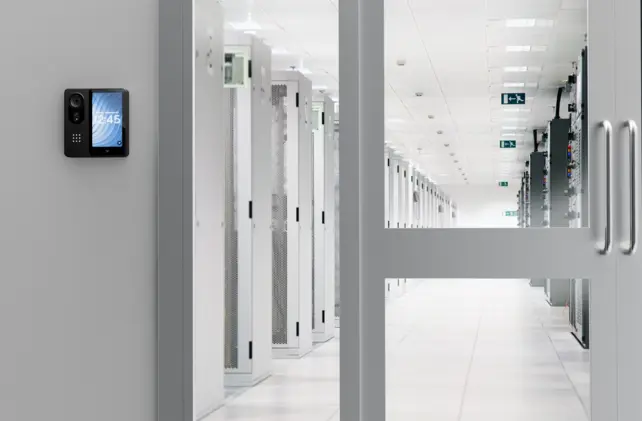
Intelligente Zutrittssysteme
Figure 5: Intelligent access systems
Gesamt-Sicherheitslösungen
Figure 6: Integrated security solutions

An attacker standing in front of an open rack no longer needs to overcome a firewall. Physical security and cybersecurity therefore belong under shared responsibility, in a common situational picture and within a common budget.

Artificial intelligence is changing security architecture

AI is a double-edged sword. Attackers use it to automate and target their attacks more precisely. At the same time, it gives energy utilities new ways to monitor and protect their infrastructure. AI-supported security platforms can, for example:

  • automatically detect unauthorised access
  • analyse unusual patterns of behaviour
  • track people within defined security zones
  • raise an alarm when doors are left open
  • detect attempted manipulation
  • monitor compliance with security and occupational safety requirements
  • detect critical environmental changes

The real added value lies less in automation than in speed and context. AI brings together information from different sources and correlates events: an open door, an unknown person in a security zone and unusual network activity become a recognisable security incident within seconds. Particularly across extensive operating sites, substations, control centres or data centres, security teams can identify threats before they cause operational disruptions.

The next challenge: IoT and Operational Technology

Sensors, actuators, measuring devices and control units increasingly communicate via IP-based networks. Each of these devices is another potential point of attack. Compounding the challenge, IT systems are regularly updated or replaced, whereas OT and IoT components often remain in service for decades. Security requirements that are taken for granted today usually played only a minor role when these components were developed.

This makes the following even more important:

  • standardised security concepts
  • continuous vulnerability management
  • network segmentation
  • secure communications protocols
  • professionally planned integration concepts
  • centralised monitoring of IT and OT environments

Many of these systems are also located at geographically dispersed sites such as transformer stations, substations or measuring points, often outside conventional security zones. This makes it particularly clear that resilience is not determined by the most advanced security solution, but often by the inconspicuous component that received little attention for years.

Conclusion: security of supply begins long before the power cable

Power grids carry energy. Information and communications systems carry the information required to control, monitor and optimise them. Only when both worlds are designed for resilience can the security of supply on which the economy and society depend every day be achieved.

Data centres, fibre-optic networks, structured cabling, OT systems, cybersecurity, access control and intelligent monitoring are no longer isolated disciplines. Resilience is not created by individual products, but by an end-to-end security concept across all layers. If a single component fails, the consequences generally remain manageable. The situation becomes critical when several seemingly minor weaknesses come together and reinforce one another. The greatest risks therefore often lie not in known vulnerabilities, but in the interactions between systems that have evolved over many years.

It is therefore worth taking a holistic look at the organisation's own infrastructure on a regular basis. Are the interfaces between IT and OT adequately secured? Do network rooms, cabling and transmission paths meet today's requirements? Is physical security consistently integrated with cybersecurity measures? And is there a complete picture of all critical dependencies?

Anyone unable to answer these questions with certainty, or whose infrastructure has not been reviewed holistically for some time, should take a critical look at the status quo. An independent infrastructure check, a resilience audit or a discussion with experienced infrastructure and security specialists can reveal weaknesses before they become a problem. After all, security of supply is not created only when a disruption occurs, but long beforehand: through transparency, forward-looking planning and the consistent closure of gaps along the entire infrastructure chain.

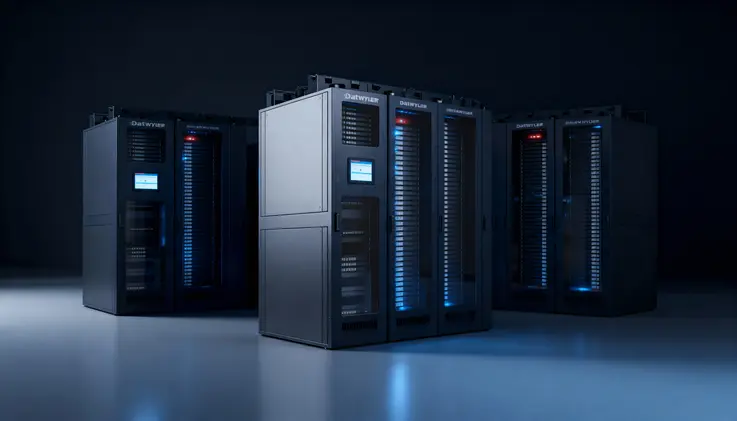
Modulare und skalierbare Datencenter-Lösung
Figure 7: Modular and scalable data centre solution

Dätwyler IT Infra

Dätwyler IT Infra is an international company headquartered in Switzerland, with subsidiaries in Europe, the Middle East and Asia. Dätwyler helps organisations around the world successfully expand their core business through future-proof and intelligent IT and OT infrastructures. The solid company operates in the market as a supplier of innovative system solutions, products and services for data centres, fibre-optic networks and intelligent buildings, as well as a partial or general contractor covering the entire value chain. This is underpinned by Dätwyler's strong expertise in developing and manufacturing the required products and solutions, its project experience, global presence and internationally established partner network. Dätwyler was founded in 1915 and employs more than 900 people worldwide.

Learn more

The industry has its say

Interesting topics, diverse perspectives, innovative ideas: PerspectivE offers specialised articles and analyses by the industry for the industry. Discover new perspectives for tomorrow's energy world here.

Become an author

Analytics settings

We use Google Analytics to measure website usage without advertising personalization. Analytics cookies are enabled by default for visitors in Switzerland unless you previously declined. Elsewhere, they remain disabled until you enable them. You can change your choice here. This choice applies to this browser; the page will reload.