Utilities are the backbone of our society. Electricity, gas, water, and district heating feed power to hospitals, schools, financial systems, public transportation, emergency services, and government operations. When these systems function as intended, they are the epitome of seamless solutions. When they fail, the consequences are immediate, far-reaching, with financial repercussions and real impact on people.
I have been in this sector for decades, now as part of Switzerland’s safest and fastest fiber optics network operator, and what I see day in, day out is a highly decentralized utility landscape, with hundreds of operators handling critical systems, each ensuring that vital services remain available to citizens and businesses alike.
This decentralization has historically been a strength, creating accountability and operational security. But I also see how the utilities’ operations decentralized nature is also reflected in the cybersecurity strategies within the sector: isolated and private.
And yet, one big factor is changing the rules of the game: interconnectedness. This puts extreme pressure on private lines as they were not built to handle this type of interconnectivity. So, utilities tend to lean towards Internet-based connectivity.
It comes as no surprise that regulatory expectations are rising in tandem with this digitalized interconnectivity. In Switzerland, frameworks such as the ICT minimum standards (IKT-Minimalstandard) are tightening cybersecurity and resilience requirements for critical infrastructure. Internationally, regulations like NIS2 reflect the same shift towards stricter cyber resilience for entities operating essential services for society.
In short, authorities expect utilities, gas and water suppliers, to demonstrate resilience, including at the connectivity layer. And that’s where I believe the Secure Swiss Utility Network (SSUN) offers a better alternative to existing solutions.
The case for a new network model in the digital utility sector
Traditionally, to ensure the resilience of the energy ecosystem, critical operators have used private lines (point-to-point lines) to connect substations, control systems, and operational technology (OT).
The clear advantage in this approach is the isolation from the public Internet that brings high security. However, private lines cannot meet the growing demands of a more distributed utility sector, one that now includes IoT devices, smart meters, and an increased need for remote access for both the workforce and field engineers. The Internet becomes, at first glance, the only viable alternative.
While the Internet excels at openness and global reach, those very qualities also create a massive attack surface. Services exposed to everyone, everywhere are inherently harder to protect, regardless of how strong application-level security measures may be.
To be fair, critical infrastructure is not meant to rely on the Internet for these use cases to begin with. The Association of Swiss Electricity Companies (Verband Schweizerischer Elektrizitätsunternehmen, VSE) recognized that utilities needed an alternative: a network model that delivers high resilience and security while enabling modern digital operations. This is precisely the solution the Secure Swiss Utility Network (SSUN) was designed to be.
The way forward: SCION’s SSUN – a coalition for the needs of today’s utilities
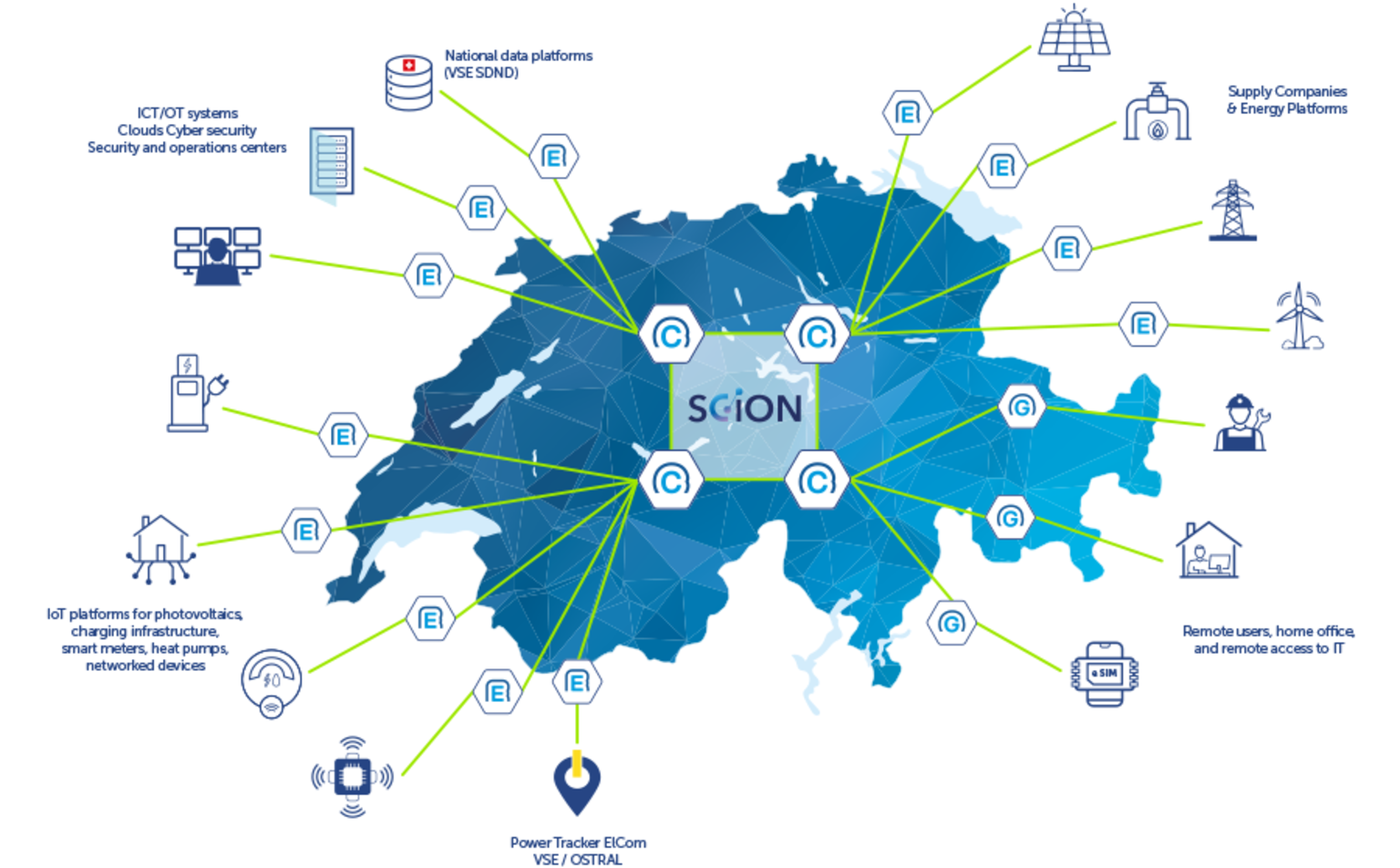
Let's start by saying that the SSUN is a coalition-based network, built on the SCION Internet with clear governance that defines who can be part of the network. Not only does the governance define which connectivity service providers can join the network, but also which users, namely, utilities, gas and water companies.
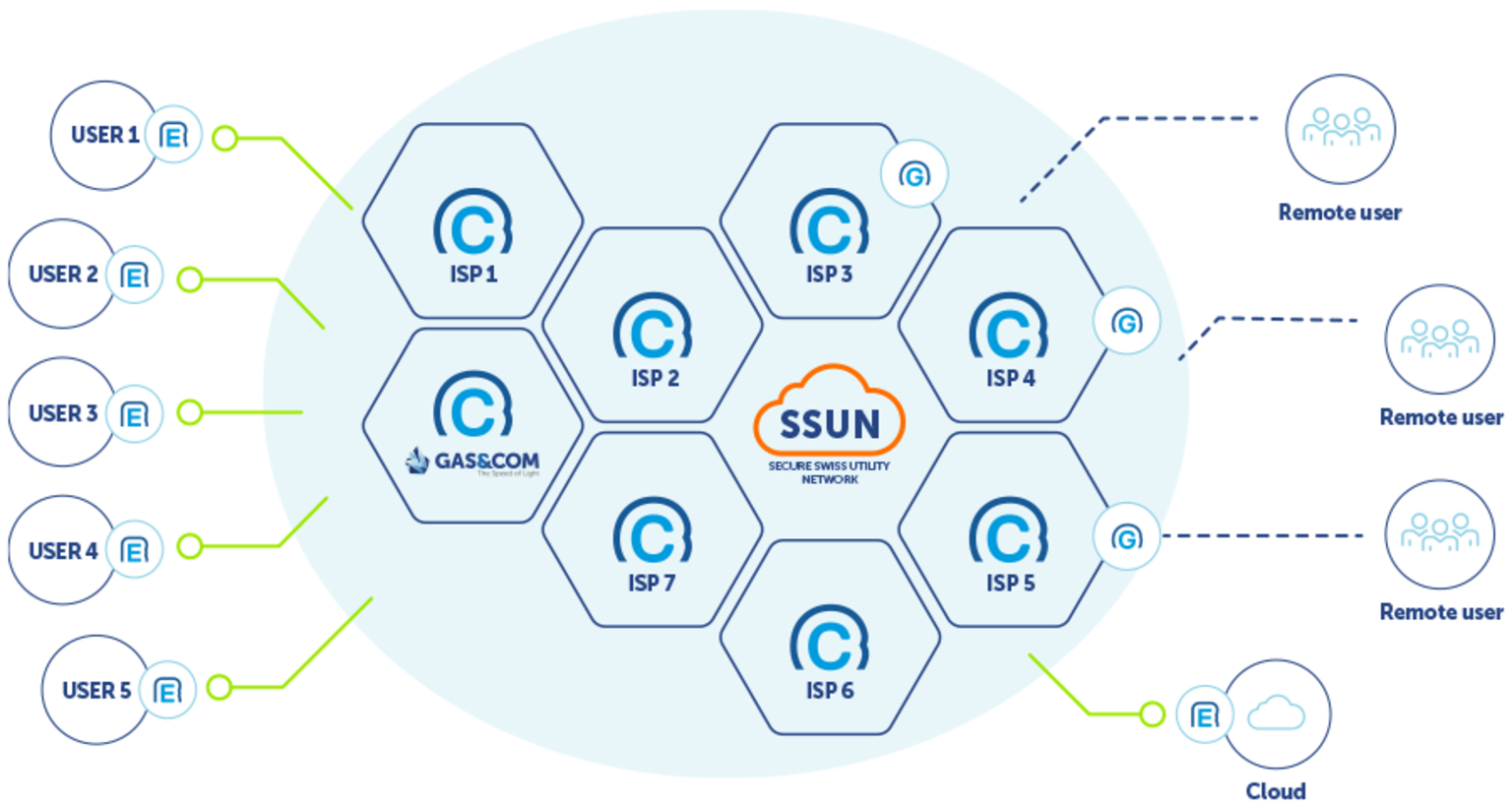
The SSUN is semi-open, allowing users to leverage this infrastructure for various use cases. For example, the national data platform, in accordance with the Electricity Supply Ordinance (OApEl), will be operated in line with VSE guidelines on standardized data exchange with the national data platform via the SSUN. Users can also put their own critical systems on the SSUN, benefitting from the following advantages:
- Higher security: On the SSUN there is up to 99.9% reduced attack surface compared to the Internet. Being invisible to attackers means that here is less risk of DDoS and ransomware cyberattacks.
- Cyber resilience: Within the SSUN, users can benefit from redundant connectivity offered by various providers. On top of that, SCION’s multi-path feature offers fast failover: if a path is congested or breaks within the SSUN, data is redirected in less than a second.
- Sovereignty: The SSUN is located in Switzerland, with only Swiss users and service providers part of the network. This means that sensitive data cannot be routed through foreign or unapproved ISPs and nations.
How our fiber optics network makes the SSUN extra resilient
Our role within the SSUN is that of a connectivity provider and, critically, a contributor to provider diversity, one of the core pillars of SSUN’s resilience. We are part of the federation of connectivity providers together with Axpo Systems, Cyberlink, Litecom, Sunrise and Swisscom. What we bring to this mix is extra resilience.
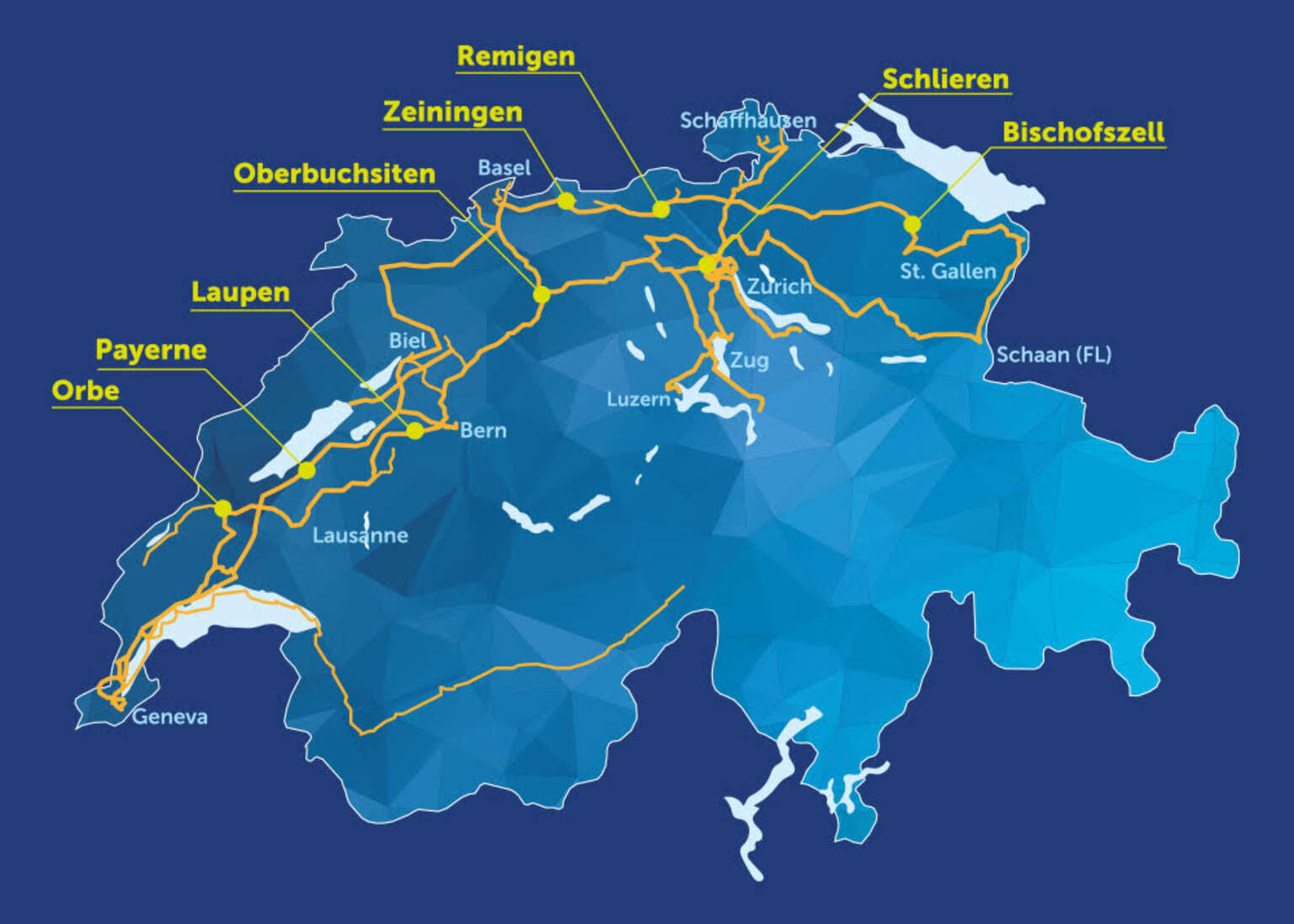
As operators of essential physical networks across Switzerland, we are uniquely positioned to strengthen SSUN’s resilience objectives. Our fiber-optic infrastructure is geographically distributed and provides nationwide coverage through a 6,000 km-long backbone. This core network runs independently from other ISP paths, along pipelines, and operates under strict security and regulatory frameworks. As a result, it forms one of the most secure fiber optics backbones in Switzerland.
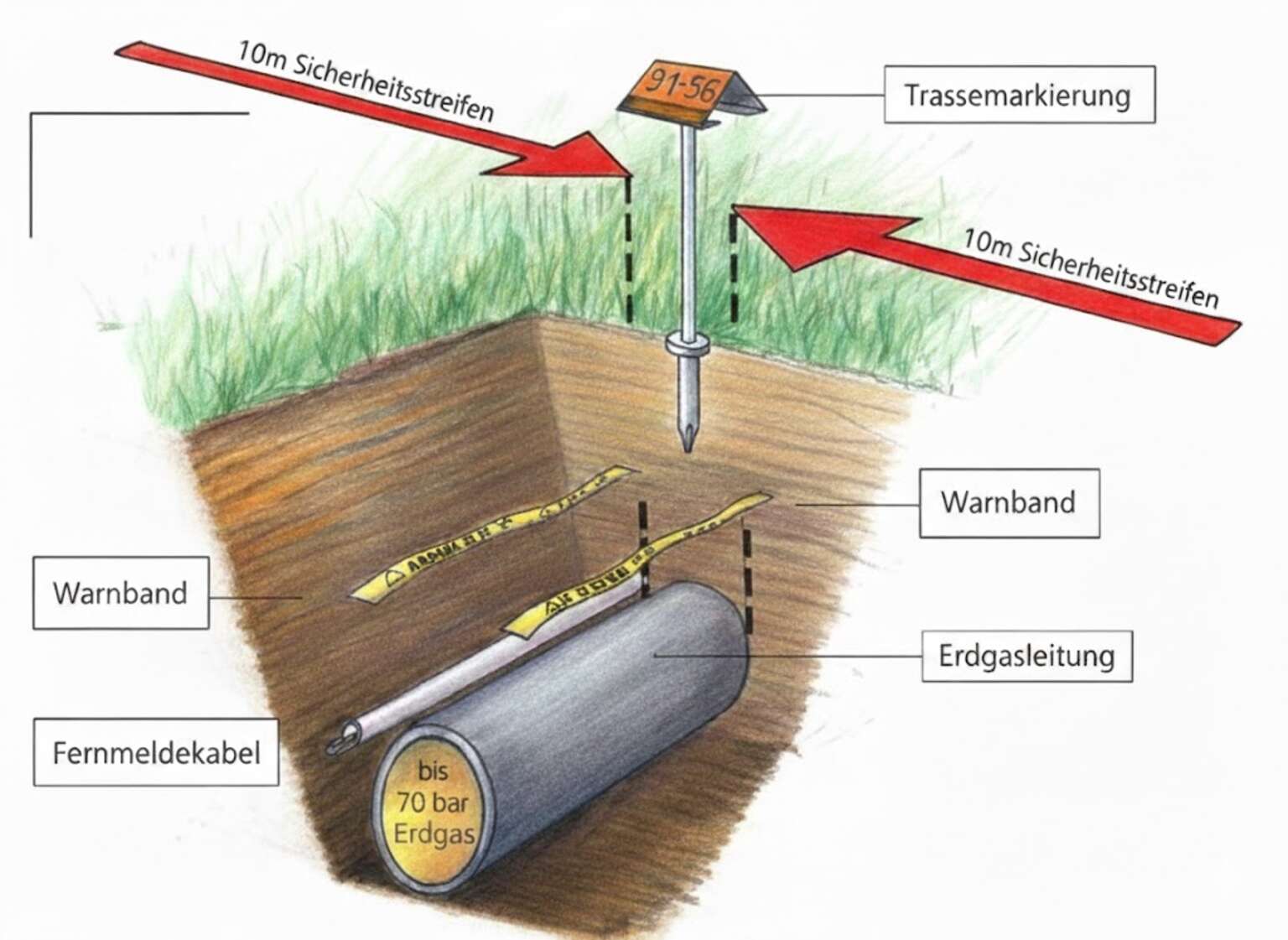
We are particularly proud of the fact that our fiber-optic backbone is subject to bi-weekly route inspections, carried out on foot, by vehicle, and by aerial survey. We also implement clear rules to further reduce the risk of intentional (or unintentional) disruptions with our lines: third-party lines maintain a minimum distance of at least 10 meters from pipelines and cable protection conduits, while roads, railways, and waterways maintain a minimum distance of at least 2 meters.
Building on this physical backbone, we design, deliver, and operate customer-focused connectivity solutions based on fiber-optic infrastructure for connections across Switzerland, Liechtenstein, and neighboring countries. This infrastructure is now also available to the Secure Swiss Utility Network.
SSUN already delivers resilience through provider diversity and redundant connectivity. Our contribution adds an additional layer: physical infrastructure that is extra protected and remains operational even in energy shortage scenarios. With backup systems in place, we are prepared to bring connectivity online immediately when disruptions occur, further strengthening the resilience of critical utility communications taking place on the SSUN.
Source: Erdgas Ostschweiz AG
Enabling real-world utility use cases
The value of SSUN becomes tangible when applied to an ever-evolving utility sector that is clearly moving towards digitalization.
For example, as part of the Swiss federal government's Energy Strategy 2050, by the end of 2027, 80% of all metering systems in a network zone will have to be smart meters. This opens the sector to new threats where attackers can exploit vulnerabilities in the head-end system to steal customer data and infiltrate or disrupt grid operations. Or, as bad, hackers can carry out DDoS attacks on the smart meter’s head-end systems to disrupt the entire energy infrastructure. With millions of smart meter devices, it is complex to secure each and every one of those. Utilities can protect the head-end system instead by placing it on the SSUN and reducing automatically its attack surface and increasing cyber resilience.
There are multiple other use cases, such as IoT devices, critical web services for remote access by home office and field engineers, and control room connectivity, all of which benefit from a network that offers clear governance, a reduced attack surface, and provider diversity.
As utilities expand digital services and integrate new technologies, the ability to do so on a secure, sector-specific network becomes a strategic advantage. SSUN enables the sector’s natural evolution towards digitization without forcing utilities to compromise on security or compliance.
Most significantly, they benefit from a resilient network that was built specifically for Swiss utilities. The SSUN also allows operators in a highly decentralized ecosystem to collaborate securely without relinquishing control to foreign infrastructure. In today’s geopolitical environment where networks and data can be weaponized, this level of control is crucial.
A model for tomorrow's Switzerland
Switzerland already serves as a global reference point for SCION-based critical networks that ensure high levels of resilience against cyberattacks. On the Secure Swiss Finance Network more that 300 financial institutions (SSFN) exchange up to 300 billion Swiss francs daily and without outages or security incidents to date. The SSUN extends this leadership to utilities, helping the utility sector transition into tomorrow by upholding high standards of security and resilience.
Trust in the SSUN as a pillar of the Swiss utility sector’s cybersecurity strategy has also been recently reinforced by the Swiss Federal Electricity Commission (ElCom). They confirmed that the integration and operating costs of the SSUN qualify as recoverable network costs.
We are proud to be part of the SSUN with our fiber optics network, offering confidence to decision-makers in the utility sector, not only in meeting regulatory standards, but most importantly upholding society’s trust in the utility ecosystem. With the SSUN, Switzerland is already showing what that future could be, and we are a key part of this story.