

The growing case for flexibility at the grid edge
The distribution grid was designed around a fairly predictable pattern: centralized generation feeding consumption that varied within known, predictable bounds. Reality is already quite different today, and generation and consumption will continue to change in the coming years. Local solar generation, heat pumps, batteries and electric vehicle (EV) charging are shifting load and injection profiles toward peaks that are larger and harder to forecast than the ones the grid was built for, because of renewable volatility. Switzerland's own regulatory response reflects the scale of the shift: a new flexibility regulation, in force from 2026, gives suppliers and consumers new options to make greater use of flexibility for the benefit of the grid [1].
Across Europe, the increasing grid congestion is no longer marginal either: a May 2025 study by Beyond Fossil Fuels, E3G, Ember and IEEFA found that grid capacity constraints led to an estimated EUR 7.2 billion in curtailed renewable generation across just seven European countries in 2024 alone, with roughly 1,700 GW of renewable projects still waiting in connection queues [2].
Reinforcing grid infrastructure is one response, but it is capital-intensive and slow relative to the pace at which distributed assets are being installed. The complementary lever is demand-side flexibility: enabling buildings and EV chargers to shift when they draw or inject power, so that existing grid capacity can serve more demand without local bottlenecks. Demand-side flexibility is increasingly recognized as an alternative to reduce system costs and ease congestion without new grid infrastructure investment [3,4].
Coordinating three roles: grid operator, building operator, orchestrator
Making demand-side flexibility available in practice requires connecting three parties:
- Grid operators know where and when local constraints occur.
- Building and fleet operators control the distributed energy resources, i.e., batteries, EV chargers, heat pumps and solar panels, that could respond and are ultimately responsible for the comfort and service level their own users expect.
- An orchestration layer sits between them: forecasting demand, optimizing local dispatch, and translating a grid operator's request into a control action, and back again into a verifiable signal the grid operator can rely on.
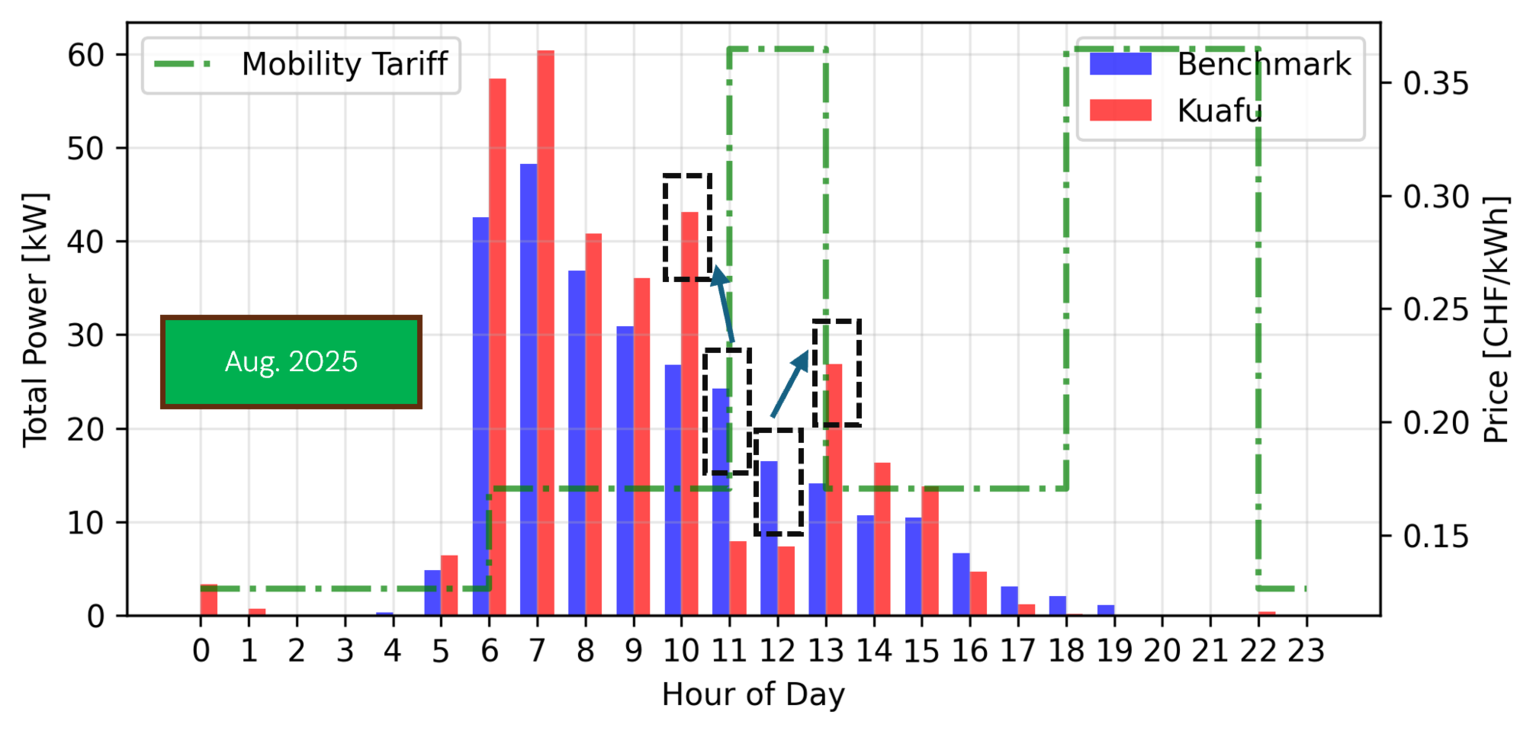
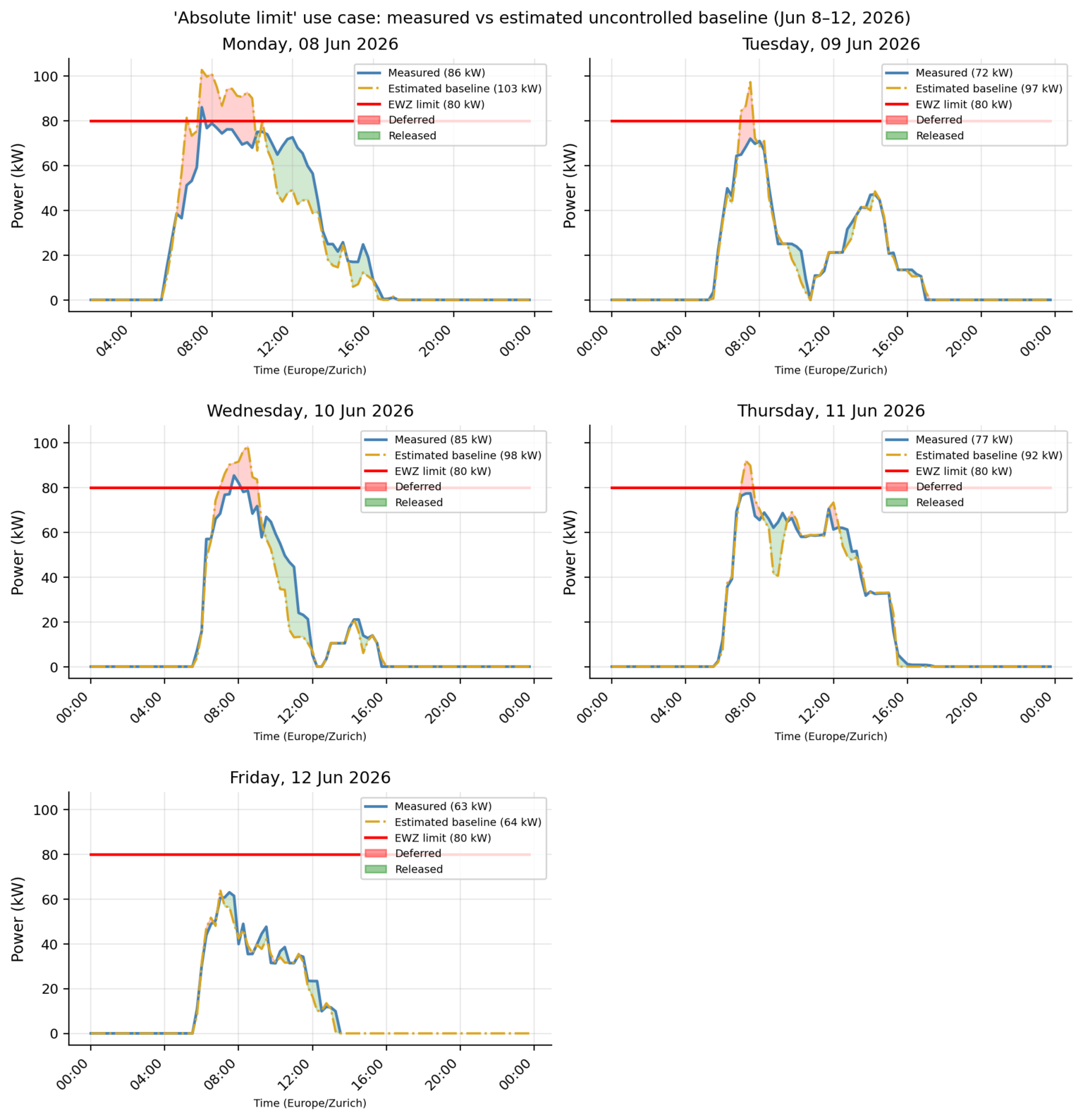
The two pilots summarized below, one conducted by kuafu together with Energie 360° and Smart Energy Link, the other by kuafu with Energie 360°, ewz and SmartGridReady, were designed to generate the following evidence: first, that a building operator's energy resources can be optimized to respond to grid tariffs without degrading the service its users receive; and second, that the resulting demand-side flexibility can be reported to, and constrained by, a grid operator in real time to manage congestion.
Evidence from the field
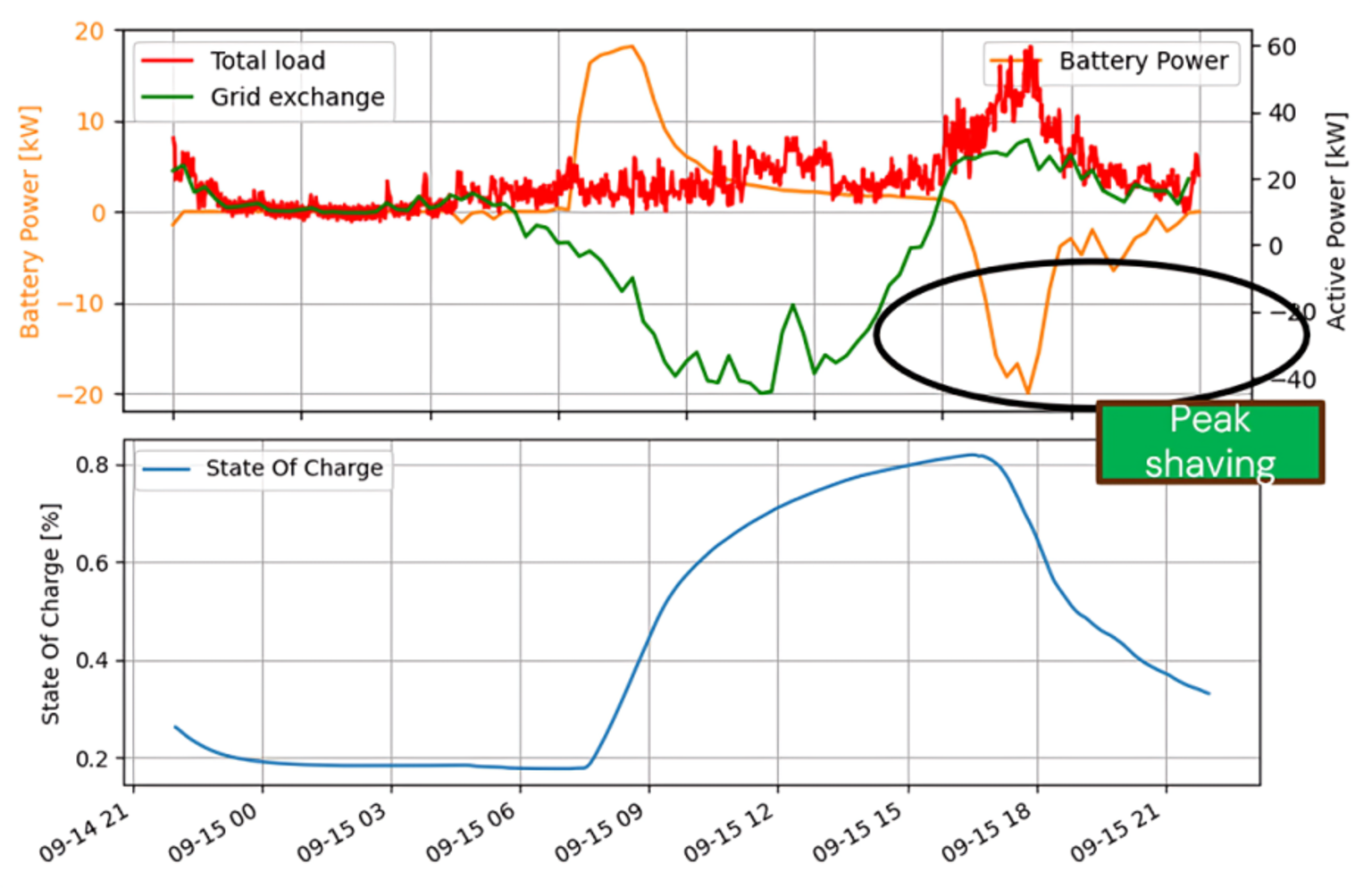
In the first pilot, a collaboration between kuafu, Energie 360° and Smart Energy Link, two sites were used. At the Arrivo multi-family development in Kloten, a 40 kW / 80 kWh battery combined with 120 kWp of solar was operated with kuafu's predictive control engine, targeting self-sufficiency and peak shaving, over a test period from June to September 2025. Smart Energy Link provided the device infrastructure for kuafu to communicate with the devices in the building, supplied real-time data on the site's energy balance, consumption and production, and was in charge of safe operation in case of communication loss.
Figure 1 illustrates the resulting operation over a single representative day: kuafu's predictive engine forecasts the site's load profile (red curve, top figure), including its evening peak, and pre-charges the battery (orange line) earlier in the day, as soon as solar generation is available, to maximize self-sufficiency. Conventional peak-shaving controllers typically rely on a fixed threshold that has to be pre-configured; kuafu's engine instead forecasts the peak in advance and times the battery's discharge automatically, reducing grid electricity imports. Measured against the standard benchmark controller, this improved cost reduction by 72% in the test period.